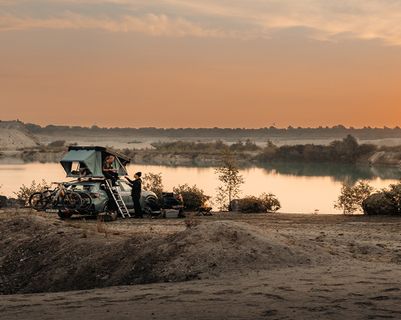
Two people laying in an open rooftop tents looking out on a nearby lake.

Are rooftop tents actually comfortable to sleep in?

Yes, they are. A good night's sleep in a rooftop tent comes down to four things: a mattress you find comfortable, heat regulation and ventilation, enough quiet to rest, and enough darkness to keep sunrise from waking you early. Get those right and you can feel as settled as you are in your own bed.

Whenever someone asks how comfortable you can be in a rooftop tent, I feel like they're anticipating a hedge. Comfortable enough. For camping. Here's what I think they're picturing. You get to camp and can't find a flat place to park, so you spend the night feeling like you're rolling down a hill instead of sinking in for sleep. It's so hot and the air is so still you can barely breathe, and the mattress the tent came with? The manufacturer might as well have given you concrete with felt on top. You finally drift off despite the tent flapping in the wind, only to wake at the first hint of sunrise in a condensation-soaked, vaguely coffin-like box.

That's not what it should be like. Comfortable should mean comfortable.

My sleep up there is roughly as good as it is at home, and I look forward to those nights. Curled up in my sleeping bag, windows cracked with a cool breeze, crickets over the hum of a nearby stream. Then sleeping in as late as I want. You can have that too, with a little planning. If you read our first article, this’ll sound familiar. Comfort is a system. It isn't one thing, and the answer isn't universal; it's the sum of a lot of small decisions.

A car in a forest mounted with a rooftop tent

Is the mattress that comes with a rooftop tent good enough?

Often, yes. Many stock rooftop tent mattresses are extremely comfortable, though comfort is deeply personal: sleep position, body weight, and preference all factor in. Test one before you buy if you can. If the tent you want doesn't come with the mattress you need, a topper or a camp pad underneath usually solves it.

Ask around and you'll find, for nearly every brand, people who love the exact same mattress someone else can't stand. "Comfortable" is a real, achievable bar, though, and plenty of tents clear it. I'm a taller side sleeper, so I need real support to avoid bottoming out: dual foam, on the thicker side, with some structure to it. I sleep well on our Thule Widesky mattress for days at a time. Mileage really will vary.

If the stock mattress isn't quite right, a topper is often the simplest fix, and many companies sell them sized for their tents. They're great if you want the extra squish. Plenty of people add an inflatable camp pad underneath the mattress instead, for a bit more support. That works too.

Rooftop tents don't come with sheets, but plenty of brands sell fitted sheets cut for their tents, which solves a real problem: mattress dimensions are odd enough that standard sheets often don't fit perfectly. If you have sheets or a comforter you love and the size is close enough to work, feel free to bring those instead. Bring your own pillow especially. A familiar pillow does more for sleep quality than almost any other single item. A rooftop tent is a gateway to a bigger trip, and sleeping well is what gives you the energy to enjoy it. Do that however feels best for you.

Is there enough room in a rooftop tent?

Yes, if you buy the right size. Rooftop tents range in size from one person to six-plus person, so "enough room" is about matching the tent to who's sleeping in it, not assuming a standard size will do. After that, it's how you use the space: gear off the mattress, everything with a spot, and knowing who takes the ladder side.

My partner and I recently spent a week out with her 70lb dog, Bowie, in my Thule Widesky. Three bodies in a two-person tent is asking that tent to do more than it was designed for. It worked, but it took real thought to stay comfortable (and helped that we all like each other).

In a limited space, clutter is the enemy. Everything gets a dedicated spot. Shoes live in an exterior boot bag. Extra clothing goes overhead in a gear net. Headlamps, books, and the necessary amounts of candy go in side pocket. I'll admit, it's a constant battle to keep gear from exploding around the tent. We'd need a bigger tent otherwise, and Bowie would find a way to take up that extra space anyway.

One more thing I've learned the hard way: whoever gets up most at night should take the ladder side, so nobody's climbing over anyone at 3am. Your tent mate will thank you.

Dense green forest surrounding a shaded camping area.

Will I be warm enough?

Yes, with the right setup. Staying warm in a rooftop tent comes down to three things: insulating underneath you, staying dry, and matching your sleep system to the temperature. A heater is convenience, not a requirement.

Start underneath you. Aluminum doesn't hold heat, so the floor of your tent sits at whatever the outside temperature is. Your mattress insulates you from most of that, but foam insulates worst where your weight compresses it, so the cold finds your hips and shoulders first. An anti-condensation mat breaks that direct contact, which is partially why it stays in my tent year round, moisture or not. On really cold nights, throw something solid underneath the mattress for even more warmth. A closed cell foam pad or an old wool blanket can do wonders.

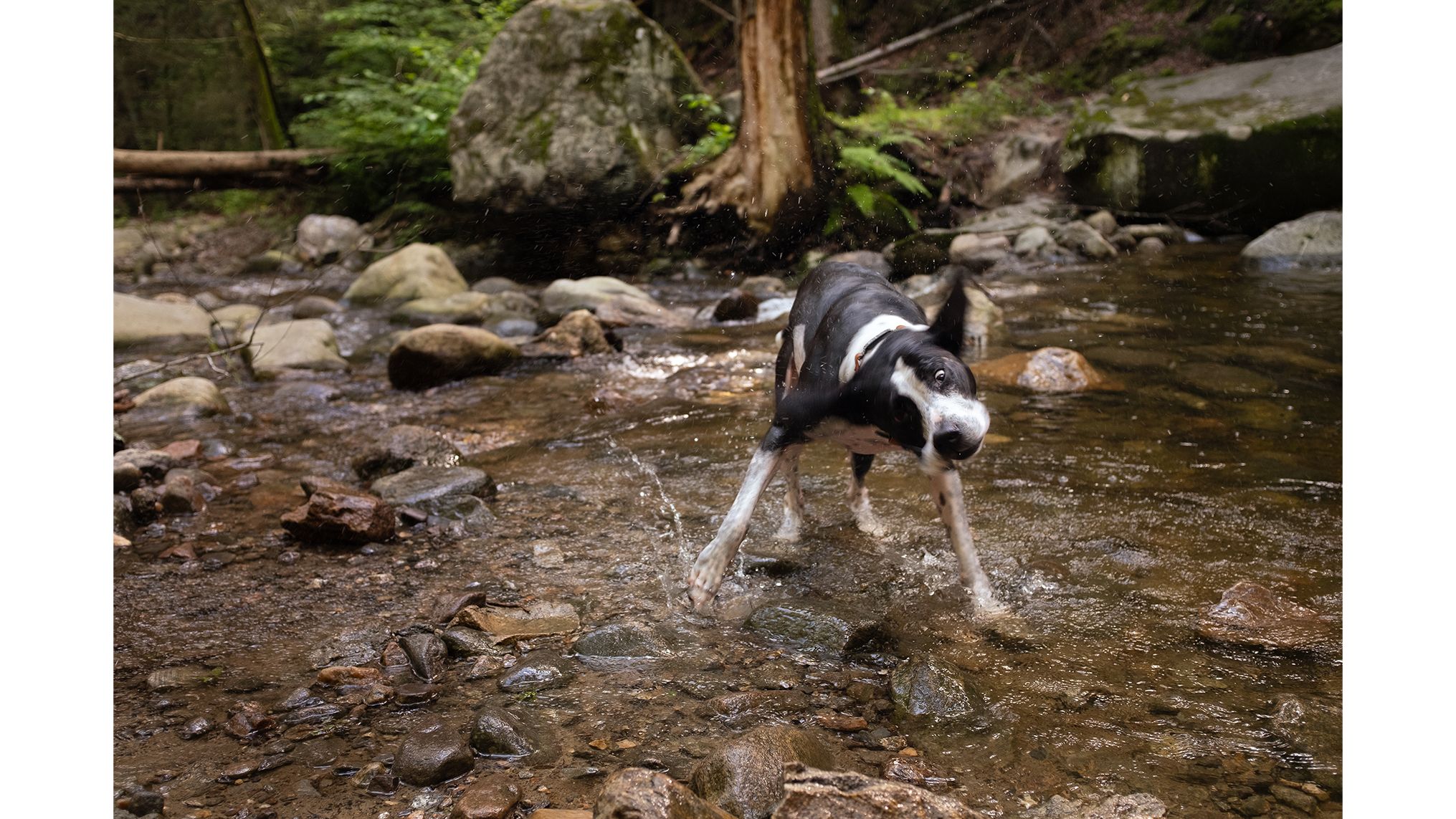
Staying dry is a key component to staying warm. Change into dry clothes before you get in the tent, keep wet gear out, and dry the dog off before letting them up. Moisture works against you twice: it feeds condensation, and wet clothing keeps pulling warmth from your body all night, even inside an otherwise warm tent.

From there it's your sleep system. Flannel sheets trap more warm air than cotton and make a good cold-weather baseline. I lean toward a sleeping bag over a comforter once temperatures drop, not because it's inherently warmer, but because a temperature rating gives me peace of mind. My partner and I each use a midweight bag with a shared blanket over the top, which gets us the rating we want without sleeping like strangers. In the coldest months, add a liner and think about what you're wearing to bed. You can stay warm in almost any conditions with the right gear, but it gets cumbersome and expensive fast. That's where diesel heaters come in for a lot of people.

Diesel heaters are increasingly common and affordable. They all work the same way: a small unit outside the tent burns fuel in a sealed chamber, and a fan pushes warm air in through a hose while exhaust stays outside. Many rooftop tents now build in a port for one. A heater isn't necessary, but the convenience is real, they help manage condensation, and most come with a remote so you can adjust from bed. If you buy one, follow the manufacturer's setup instructions carefully, keep the intake and exhaust clear, and run a carbon-monoxide detector in your tent.

One last easy one: park where morning sun will hit the tent, if you can. Waking up in the shade on a cold morning isn’t enjoyable, and it's easy to plan around if you scout your site first.

Small rooftop tent vent cracked open to allow airflow while keeping the main window closed.

The window doesn’t need to be cracked dramatically, a little bit can go a long way to combat condensation.

Plaid wool blanket tucked beside a rooftop tent mattress for added insulation on colder nights

Something about putting a wool blanket under the mattress to act as insulation

Do rooftop tents get too hot in the summer?

Most summer nights are comfortable. Staying cool in a rooftop tent relies on three things: where you park, how much air you can move through the tent, and lighter bedding. Real desert heat in August is hot in any tent, on the ground or on the roof. That's a camping problem, not a rooftop tent problem.

In summer, park where the site stays coolest longest. If there's a tree between your tent and the sunrise, get behind it, and you're less likely to wake up feeling like a rotisserie chicken. Open the tent as soon as you get to camp. A closed tent that's been baking on your roof all afternoon holds that heat, and even an hour of airing out before bed makes a difference at night. Many tents also let you roll back or remove the rainfly entirely, for far more ventilation.

Ventilation is the biggest opportunity to stay cool, and it’s something to think about even when you’re in the research phase of buying a tent. Tents with large panoramic windows move a significant amount of air, and on a breezy day that alone is often enough. When it isn't, a rechargeable cordless fan is one of the best small purchases I've made. Mine's about 7 inches, runs two full nights on a charge, and doubles as a light and a power bank. I use it two ways: pointed out to push hot air from the tent after a warm day or pointed at me once I'm in bed. As someone who runs hot when I sleep, it's changed how comfortable I am on summer nights more than anything else I've bought.

Bedding matters on warm days too. Swap those flannel sheets for lighter weight cotton in summer, and a lighter bag or comforter along with it.

Portable air conditioning units for rooftop tents do exist. Same general principles as a diesel heater, with the unit outside and a hose running in, though most that I've seen need 12v power to run. I haven't used one, so I'll leave that to someone with hands-on experience.


Rooftop tent interior with orange bedding, storage pockets, large mesh windows, and a rechargeable fan.
Anti-condensation mat underneath a rooftop tent mattress to create airflow between the bed and tent floor
Wet dog shaking off in a shallow forest stream during a camping trip.
Exterior rooftop tent shoe bag holding a pair of shoes beside the vehicle.

Do I need to worry about condensation in my rooftop tent?

Not really. Condensation is completely manageable with an anti-condensation mat, a couple of windows cracked overnight, and a quick towel wipe down in the morning. Some condensation is normal, especially as temperatures drop. It's worth handling because a damp tent is a cold tent, and packing a wet tent away trip after trip is one of the fastest ways to shorten its life.

Two people breathing overnight release a surprising amount of water vapor, and that moisture goes looking for the coldest surface it can find. In a rooftop tent that's the walls and the floor, both sitting at outside temperature. Wet gear, damp clothes, and a wet dog all add to the pile.

An anti-condensation mat handles the floor. It sits between the mattress and the tent base, creating a small ventilated gap so moisture has somewhere to go. Relatively inexpensive, easy to forget about, and worth having.

Cracking the windows handles the rest, and is important to do, even when it's cold. Sealing everything up might buy you a degree or two of warmth, but it traps all that moisture inside and you eventually wind up colder and damper than if you'd let some air move through. You don't need them wide open. A corner cracked at the front and back is usually enough.

You'll still wake up to some condensation in certain conditions, and that's normal. Keep a small towel in the car, wipe the walls down, and leave the windows open while you make coffee. If it's sunny, the tent will finish drying on its own. If it's foggy or raining, dry what you can and open it up again at home.

If you're running a diesel heater, it helps here too, since it pushes dry air into the tent while it warms it. It’s not necessary, but it does help.

For as much as this topic comes up, the actual answer is pretty simple: ventilate what you can, expect a little moisture anyway, and wipe it down when you see it.


Are rooftop tents loud?

Rooftop tents are quiet enough to sleep in. Noise comes from ambient sounds at camp, wind, and rain. A small fan handles ambient noise. Wind comes down to where you park and how tightly you secure the fabric. Rain is mostly tent design, and hardshell tents are typically quieter than softshell tents.

At an established campground, ambient noise is part of the experience. I already run a fan for airflow, and it doubles as white noise well enough to blur whatever is happening a few sites over. Earplugs cover the rest. Backcountry sites are different: the sounds of nature can feel surprisingly loud the first few nights. White noise works there too, but it also stops being so noticeable once you're used to it and becomes something to look forward to rather than block out.

On windy nights, two things help. Park with wind in mind the same way you park with morning in mind. Given the choice between an open ridge and tree cover, take the tree cover. Then keep everything tight. Rainfly secured, mesh windows zipped, loose fabric cinched down. The loudest nights I've had were always the ones where I skipped a step and left something for the wind to catch.

Rain noise depends somewhat on the style of tent you’re sleeping in. Most hardshell tents have a felt lining in the ceiling that insulates and dampens sound at the same time. I've slept through heavy rain and sleet in my Thule Widesky without a problem. You can hear it, but it's hushed and calming and has become one of my favorite experiences while camping. A softshell tent with a rainfly carries more sound. Rain hits the fabric directly and there's no real trick for quieting it down. You'll notice it, especially if you sleep lightly, but no more than you would in any ground tent.


Will morning light wake me up in a rooftop tent?

Not usually. Many tents use fabric that keeps the interior dark enough to sleep in, and the top of a hardshell tent blocks light even further. Where you park still matters, and an eye mask can come in handy if you're especially light sensitive.

Sleeping until 10am without a care for the outside world is a luxury many of us haven't had since our teenage years, and most rooftop tents allow for it: fabric chosen for durability and weather resistance often blocks light as a bonus. With the exterior flaps down on my Thule Widesky (not zipped, so I still get airflow) I can be parked in full sun and the tent stays dark enough that light isn't what wakes me. Not pitch black, but close. If you need that extra bit of darkness, I know plenty of people who refuse to do any sort of camping without an eye mask.


So, will I be comfortable in a rooftop tent?

Yes. Comfort in a rooftop tent isn't luck, and it definitely isn't about being someone who doesn't mind discomfort. It's a handful of small decisions, and once you sort them out, you'll sleep as well up there as you do at home.

One of the joys of camping is refining your system over time. Try a new gear organizer or see if cracking an extra window cuts down the condensation on a foggy morning. It's a never-ending process of notice, adjust, repeat. Our first article made that argument about setup; this is the same idea pointed at sleep.

The rest is personal. Figure out which parts of comfort matter most to you and let that steer what you change along the way. For me it's the nights I’ve already described. In my bag, windows cracked, crickets somewhere out past the stream, and nowhere to be in the morning. That's the whole reason I sort out the mattress and the mat and the fan and the parking spot. Not because any of it is complicated, but because getting it right is what buys you the night you actually came out here for.

Comfortable should mean comfortable.


Camper drying a wet dog with a towel before bringing it into the rooftop tent.

What I Do Now — Top Comfort Tips

1. Park with conditions in mind. Hot forecast, park where the shade lasts longest. Windy, get behind tree cover. Cold, take the morning sun. Pick the one condition most likely to wake you and park for it.

2. Level the bed before unpacking. Get in the tent. If it doesn't feel flat, get out and adjust the vehicle before you set up the rest of camp.

3. Build two bedding kits and keep them in the same place. Flannel sheets and the heavier bag in one, lighter cotton and a summer quilt in the other. Same logic as the tote system from last article: decide once, then you always know you're ready.

4. Test new gear at home. Sleeping bags, heaters, and liners, all before you're depending on them.

5. Always make sure there's air flow. Crack windows at opposite ends of the tent and use a cordless fan to keep it moving.

6. Don't skip the anti-condensation mat. It works, it’s inexpensive, and it can live up there permanently.

7. Never store the tent wet. If you close it damp, reopen it at home and let everything dry completely.

8. Bring your own pillow. Familiar bedding makes a much bigger difference than people expect.

9. Keep a list on your phone called "next time." You'll learn a ton every time you're out, and it's easy to forget. Notice, adjust, repeat.


FAQ

Can you leave bedding in a rooftop tent when it’s closed?

Usually, yes, and it's one of the real benefits of a rooftop tent. Most hardshell tents close over a sleep system without much trouble. Softshell tents have to fold, so bulky comforters and full-size pillows can be tough. Prioritize compressible bedding and know you might need to pull a few things out.

How level does the vehicle need to be for comfortable sleep?

Not perfectly level. You want the sleeping platform flat enough that you aren't sliding toward one end or putting pressure on the same shoulder all night. A small bubble level and inexpensive vehicle levelers make this easy.

Do rooftop tents feel claustrophobic?

Usually not, particularly in tents with enough headroom to sit up and large windows. A good rooftop tent feels more like a small room than an enclosed box. Shell shape, wall angle, and interior height all matter. If enclosed spaces bother you, climb into the exact model before buying and spend a few minutes lying inside with the windows partly closed.

Are rooftop tents comfortable for tall people and side sleepers?

They can be, but mattress support and interior dimensions matter. Check the actual sleeping length and make sure sloped walls won't press against your head or feet. Taller side sleepers benefit from a supportive mattress that resists bottoming out at the hips and shoulders.

Is a hardshell or softshell rooftop tent more comfortable?

Neither is inherently more comfortable. Hardshell tents are often quieter in rain, darker in the morning, and easier to close with bedding inside. Softshell tents typically offer more sleeping area, larger windows, and more ventilation. Choose based on the discomfort most likely to bother you: noise and light, or limited room and airflow.

Are rooftop tents private?

Visually, yes. Their height puts you above normal eye level, and most windows aren't easy to see through. Sound privacy is about the same as any tent, and a crowded campground is still a crowded campground. Think of a rooftop tent as visually private, not soundproof.

Does a rooftop tent shake or move when you roll over?

A little. Because the tent sits on your vehicle, some movement transfers through the suspension when someone rolls over or climbs the ladder. Most people notice it the first night and then stop thinking about it. It feels like mild movement rather than instability, but especially light sleepers may notice a restless tent mate.

Can a dog sleep comfortably in a rooftop tent?

Yes, if the tent has enough room and you have a safe way to get the dog in and out. Give them a defined sleeping spot, dry them off before bed, and keep claws away from mesh windows and doors. The harder question is often ladder access, but we'll have a full article on camping with your dog next month.

Are rooftop tents warmer than ground tents?

Not automatically. Being elevated keeps you off cold, damp, or frozen ground, but rooftop tent floors also transfer outside temperatures and may be more exposed to moving air. Warmth depends more on insulation beneath you, your bedding, wind exposure, and staying dry than on the tent itself.

Is there a temperature limit for sleeping in a rooftop tent?

No single cutoff applies to every tent or camper. The limiting factors are insulation beneath you, your sleeping bag or quilt, wind, moisture, clothing, and personal tolerance. Treat a manufacturer's temperature rating as product guidance, not a promise that every person will sleep comfortably at that temperature. Build experience in mild conditions before moving into real cold.


Explore