• Free shipping on rooftop tents, cargo boxes and orders over $229.99. See details.
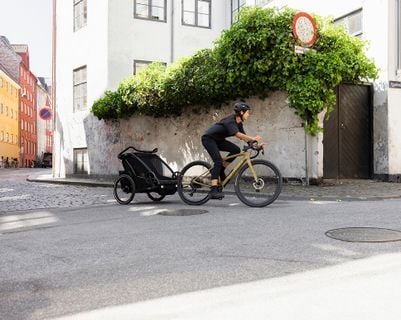
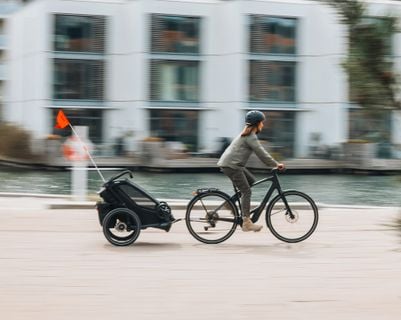
A person wearing a helmet cycles towing a two-wheeled Thule Chariot bicycle trailer with an orange safety flag.

Comparing bike trailers and cargo bikes


Cargo bikes and bike trailers are both becoming familiar sights on city streets as versatile alternatives that let you carry more, travel further and leave the car at home. Cargo bikes, with their large built-in capacity, can handle heavy loads and multiple passengers with ease. Meanwhile, bike trailers offer a high-safety, high-comfort option that attaches to a bike that a rider already owns and are winning over growing numbers of parents and cyclists.

In this article, we compare the two across key areas related to riding with kids and cargo, including safety, comfort and practical use, to help you understand what each option offers and which might be the right fit for your needs.


Quick overview


Cargo bikes

  • A dedicated transport vehicle with a built-in cargo holder
  • Primarily used for family transport, heavy cargo and urban commuting
  • Multiple variations and styles such as two-wheel long johns, three-wheel front-loaded trikes, and longtail bikes, just to mention a few


Bike trailers

  • A trailer that attaches to the rear of any bike
  • A versatile, multi-use solution including trailer, stroller, all-terrain jogger and more
  • Come in various models for different use cases and purposes


Cargo bikes come in many shapes and sizes, so rather than covering every variation, we'll focus on the three most common styles – long johns, trikes and longtails – to be able to make a general comparison.

A smiling woman wearing a bicycle helmet rides an electric bike towing a black Thule Chariot child bike trailer with two wheels, mesh windows, and a red safety flag.

Passenger and rider safety


Safety is arguably the most important factor when choosing how to transport children by bike. You want something that keeps your passengers protected and gives you confidence on the road, so you can focus on the ride rather than the equipment.


Safety measures to consider:

  • Safety harness: preferably a 5-point system that keeps your passenger secure and firmly in place during the ride.
  • Protective enclosure: a shell or cage structure tested to ensure protection for children in a collision or rollover.
  • Low center of gravity: improves stability and reduces the effect of uneven terrain or sudden movements.
  • Visibility: being easily spotted in traffic through reflective panels, lights and other visual cues.
  • Helmets: both passengers and riders should always wear helmets when riding.


In recent independent testing by Touring Club Suisse, bike trailers were confirmed as the safest way to transport children by bike (TCS, 2025). Thule bike trailers are designed to meet all of the above safety criteria. They are meticulously tested at the Thule Test Center™ to meet, and exceed, recommended safety standards. The entire trailer is built as a roll cage, which means it’s a rigid frame with a reinforced structure that helps protect passengers in the event of an impact or a rollover.

As for cargo bikes, safety solutions vary depending on the brand or manufacturer and the type of cargo bike you’re considering. Some cargo bikes with a front box designed for children may include safety harnesses, while some longtail bikes and two-wheeled models can support the fitting of child bike seats.

With children in the front box, you can keep an eye on them throughout the ride and check in easily, which can be a reassuring advantage for many parents.

For longtail bikes and bike trailers alike, a common concern is not having your passengers directly in sight, which can feel unfamiliar at first. While this fades as you become more familiar with the setup, it can be further reduced with accessories like rearview mirrors or a bike radar.

A child wearing a black bicycle helmet and sunglasses sits securely strapped into a Thule Chariot child bike trailer, smiling and giving two thumbs up. An adult's hand in the foreground returns the thumbs-up gesture.
Rear view of a person wearing a helmet cycling through a dark road tunnel, towing a black Thule Chariot child bike trailer with two wheels and a bright red rear safety light.

Stability and control


Whether you choose a cargo bike or a bike trailer, expect a short learning curve around balance and maneuvering. Either may feel unfamiliar or unwieldy at first, but most riders adapt quickly and soon navigate naturally. This can also vary depending on the model you choose. Long johns and trikes, for example, use linkage steering, which requires some extra attention to maintain control, while a longtail or a bike fitted with a trailer handles much more like a regular bike.

When it comes to stability and tipping, each cargo bike style has its own characteristics. The low center of gravity of some long johns makes them reliable in motion, though they can be a bit unstable when loading and unloading kids and cargo, or when stopping at intersections. Trikes address this with their two front wheels, offering a more stable platform overall. However, the sturdy setup can, in some cases, create a false sense of security. Sharp turns put significant pressure on trikes too, and can cause them to tip if taken too fast.

With two solid wheels and a low center of gravity, bike trailers offer great stability and swift handling. Riding with something attached to the rear takes some adjustment, but most riders find it quickly becomes second nature. Like many cargo bikes, bike trailers have a limited turning radius, so it's worth paying extra attention in sharp turns and staying within recommended speed limits.

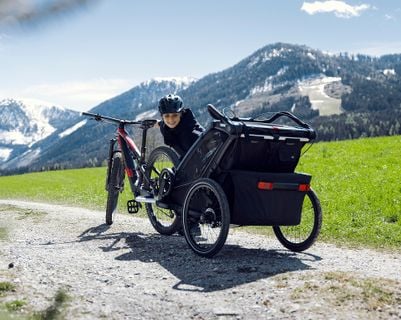
A person rides an electric bike, looking back at a black Thule Chariot child bike trailer. The trailer has two large wheels, a folded front wheel mounted on top, and an orange safety flag.

Comfort on the ride


When riding with kids, you want to make sure they have as comfortable an experience as possible, especially on longer rides and outdoor adventures.


Comfort considerations to keep in mind:

  • Weather protection: shield passengers from the elements
  • Seating: proper suspension and padding absorb bumps and shock from the road or terrain
  • Ventilation: maintain a comfortable climate for passengers
  • Noise: keep noise levels down for smooth, pleasant rides


Many cargo bikes with front boxes can be fitted with weather-protection accessories such as a canopy or rain cover, creating an enclosed environment that keeps passengers away from wind, sun and rain. Well-designed covers often include features like roll-up windows for ventilation and easy access, though enclosed spaces can become uncomfortably warm in summer and cool in winter. With longtails, passengers sit behind the rider, usually without cover, making them more exposed to the elements.

In front-loaders and trikes, children typically sit on a bench inside the box. This works well for shorter trips but can become uncomfortable over time. Without suspension, uneven surfaces make for a bumpier ride. Some models offer full suspension or better seats, though this usually adds significantly to the price.

Bike trailers are built on a solid frame and fitted with durable fabric that shields passengers from rain, wind and sun. Ventilation is typically built into the design, keeping the interior comfortable without compromising protection. Child bike trailers usually feature adjustable, padded seats, with some models offering reclining options for added comfort. The structure absorbs road noise well, making for smooth, quiet rides on rougher terrain. With the right accessories, such as air purifiers, padded seat liners or slings for the smallest passengers, comfort can be further tailored to your needs.

A smiling toddler sits strapped into a black Thule Chariot child bike trailer, holding a grey stuffed animal while a woman with long brown hair kneels beside the stroller and offers the toy to the child.

Versatility and multi-use


Aside from safety, this is where bike trailers really stand out. Thule bike trailers seamlessly transition from bike attachment to stroller mode in just a few simple steps. This means you can ride and stroll with the same unit, and with the right accessories, even go all-terrain or cross-country skiing. It also enables you to transfer your trailer to another bike, which is ideal when multiple riders in a household need access. For example, you can drop your child off at daycare in the morning, leave the trailer, and let your partner handle the pick-up at the end of the day.

Some cargo bikes offer accessories or conversion options, but their versatility lies primarily in their capacity to carry large amounts of cargo and multiple passengers in a single trip.

A family stand beside a Thule Chariot child bike trailer on a rocky mountain trail. A man with a backpack stands beside the stroller with one child, while a woman crouches next to it and another child runs toward them.
A woman crouches beside a black Thule Chariot child bike trailer. A child wearing a knitted hat sits inside the stroller, looking in the same direction.

Practical considerations


When choosing between a cargo bike and a bike trailer, practical factors often play a decisive role. Key things to consider include:


  • Cost: the total investment required, from the vehicle itself to accessories
  • Storage: how much space it takes up at home and when out and about
  • Portability: whether it can be transported, folded, or used alongside a backup
  • Compatibility: whether it works with existing equipment or requires a dedicated purchase


Cargo bikes make a strong case when it comes to raw carrying capacity. With some trikes capable of carrying loads up to 100 kg, they are a solid choice for those who regularly carry heavy loads or multiple passengers at once. Some cargo bikes also offer integrated electric assist to provide support on longer distances and on hilly terrain with a full load. However, there are practical limitations worth considering. Cargo bikes are large vehicles that require significant storage space at home and dedicated parking. They cannot be folded or easily transported in a car or on a flight. And as a dedicated vehicle, if one breaks down or is unavailable, there is no easy fallback.

Bike trailers attach to your existing bike, meaning the investment is significantly lower than purchasing a dedicated cargo bike. Thule bike trailers are foldable, making them easy to store at home or bring along on your travels, where a folded trailer can easily be checked in on a flight. Unpack it at your destination, and you have your transport and stroller ready to go. Depending on the model you choose, you can carry kids, cargo or dogs. Sitting close to the ground and the stable construction make it easy to load cargo and for passengers of all sizes to climb in on their own.


Conclusion


The choice between a cargo bike and a bike trailer comes down to what you want to carry, how you want to ride, and how much flexibility you need. Both are solid alternatives to the car, but they serve different riders with different priorities.

A cargo bike is worth considering if you regularly carry heavy loads or multiple passengers at once and want a dedicated vehicle purpose-built for child or cargo transport.

A bike trailer, on the other hand, is a strong fit if child safety is your top priority, you value a multi-use solution that works as a trailer, stroller, all-terrain jogger and more, or you want the flexibility of using your own bike and sharing access across the household.

For families weighing their options, it's worth knowing that independent safety tests by Touring Club Suisse confirm bike trailers are the safest way to transport children by bike. Add to that the comfort, versatility and practical advantages a trailer offers and it becomes a strong contender worth exploring.

With Thule's range of bike trailers, you get a solution built to the highest safety standards, designed for everyday comfort, and ready to adapt to wherever life takes you.

Rear view of a person wearing a helmet cycling along a winding gravel path, towing a black Thule Chariot child bike trailer carrying a small children's bike on top.

Explore