• Free shipping – subscribe to newsletter (see details)
  • Buy a roofbox, get 20% off roof racks
  • Note: Possible delivery delays due to summer holiday season.
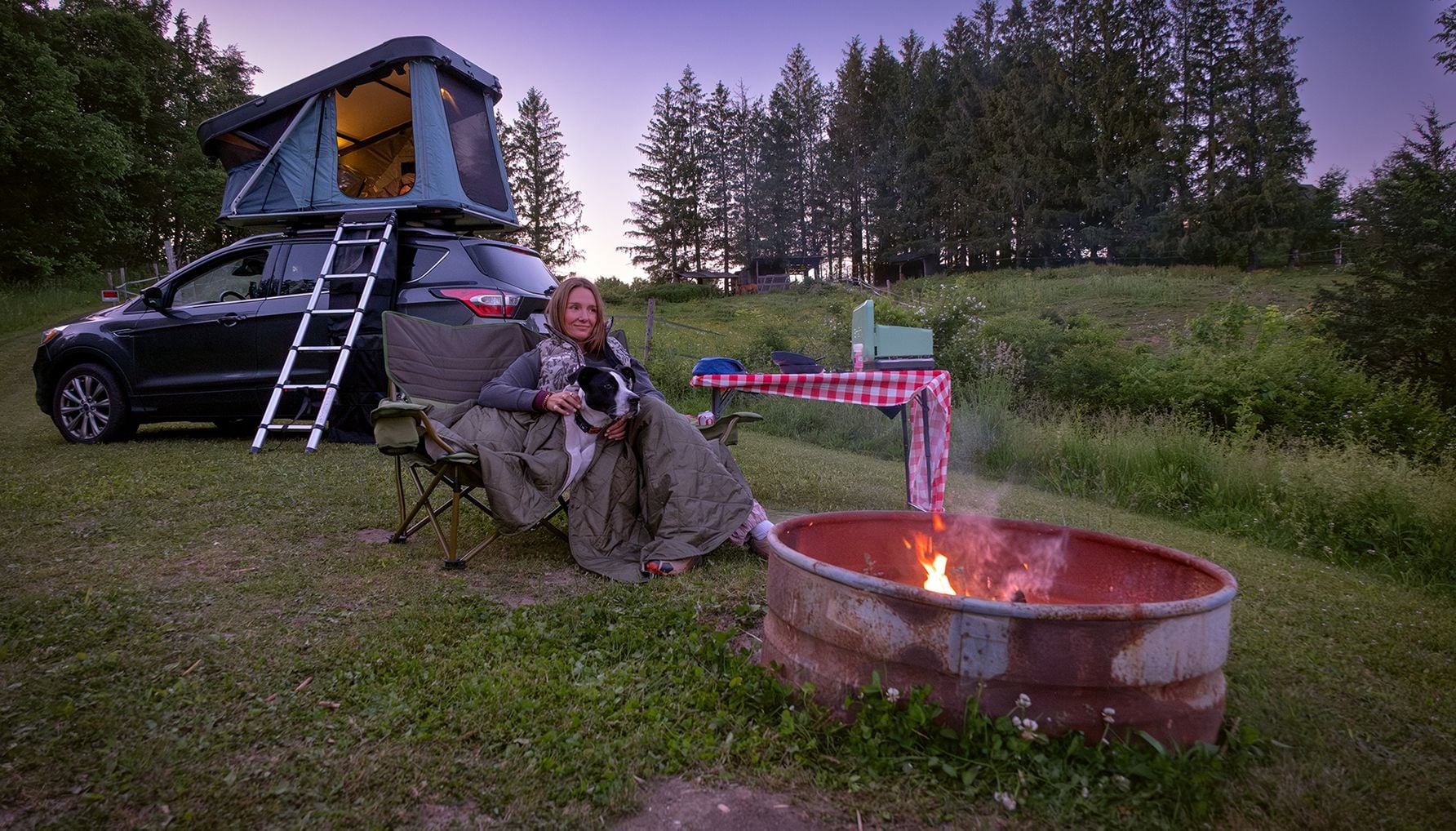
Woman  with a dog tucked beside her in a camp chair and an SUV with an open rooftop tent behind

Rooftop tent camping: An introduction

Rooftop tent camping means sleeping in a tent mounted to the roof of your vehicle, up off the cold or uneven ground, with a mattress and bedding that can stay in place between trips. Setup is usually faster than a ground tent, and packing is simpler. You’ll have to learn a few new habits: leveling the vehicle, placing the ladder, managing weather, and remembering that your bed is attached to your car. None of it is especially hard, but the first few trips will feel clunky because every small decision still takes thought. By the third or fourth trip, most of that friction fades, and what's left is one of the more rewarding ways to camp.

Rooftop tents have gone mainstream over the last decade, and a lot of that growth comes from new campers: 2.6 million people camped for the first time in 2025 alone, according to The Dyrt. Many of these new campers see a rooftop tent as a lower cost alternative to an RV that still beats sleeping on the ground. The biggest barrier to getting started though isn’t necessarily gear or money. It’s having the confidence to know that you can get out there and have a great time doing it.

When I talk to people about camping, I'm always struck by how many of them frame it as something you're either naturally good at or not. That it’s imagined to be instinctual rather than learned, like something that either clicks immediately, or never at all. This sentiment has increased dramatically with the onslaught of idyllic social media images making it seem as if some people were simply born knowing how to build a pleasant life outdoors, while the rest of us are destined to be cold, annoyed, and vaguely confused forever.

I work on these products for a living, which is a privilege. The bigger one though is getting out on these trips regularly enough to know what they actually look like. You arrive later than planned. You’re cranky from sitting in rush hour traffic. It's colder than the forecast promised. The dog is being a jerk (not my dog, obviously, mine is a perfect angel who never finds a dead thing to roll in within 5 minutes of arrival). You forgot at least one thing, probably more. You argue with your partner about which way to cut the wheel while they back into the spot.

This is where many people assume that something has gone wrong. Usually, that’s not the case at all. You're just in the stage where something new feels new. You're learning. You’re not great at camping yet. That is normal. Let’s dive into a few of the things that’ll make that learning curve a bit easier.

Woman  with a dog tucked beside her in a camp chair and an SUV with an open rooftop tent behind

Why does the first rooftop tent trip feel so hard?

The first rooftop tent trip feels hard because the small decisions compound. Each one of them requires active thought, and in the beginning they pile up faster than you clear them. Where to park so that your tent is level, what to set up first, what to cook, where you stashed the keys. None of these are real problems on their own, but ten of them at once feels like one big problem. By the third trip, most of it disappears.

Most of the frustrations and difficulties that I hear from people early on aren't really frustrations about camping itself. Most of them come from not being certain about decisions, or from making decisions that aren't ideal. When you're first starting anything, you have to actively think through every choice you make. Nothing is automatic yet. Every step takes some thought, and you’re trying to hold all of them at once. Is the car level enough to sleep on, or are we going to slide around all night? Is the ladder footing solid? Should we start breaking out the cookware and getting to work on dinner immediately? Are the headlamps charged? Why did I bring 3 separate jackets on a June night in New York?

These aren't really problems. They're certainly not major problems. But a whole bunch of minor annoyances can quickly build up to pretty major frustration, and those frustrations wind up costing you something. You drove all this way. You found a beautiful spot. The sunset is absolutely beautiful right now. That’s the part that you want to focus on. That’s the part that makes camping special. Once the logistics become automatic, it leaves more time for the actual thing. That’s the real reason the first trip feels hard. It’s not about the work or the specific logistics, it’s about how much mental and actual time it takes from the real reason you’re there.

After a few trips, that changes. The decisions stop being decisions and become defaults. None of it takes effort anymore, so your attention stays on the parts you love. The fact that competence is calming is the real beginner curve. It's knowing that all of this is more about familiarity than toughness.

Will a rooftop tent actually make camping easier?

A rooftop tent makes camping easier than a ground tent in a handful of important ways: setup is faster, you sleep off cold or uneven ground, the bed stays made between trips, you have more built in safety. It doesn't eliminate all of the work of camping, it just simplifies some of the most annoying parts.

The trips where a rooftop tent shines are the ones with more spontaneity and less planning. Take off after work on a Friday, find a flat spot, and I'm done. No clearing rocks or hunting for the driest ground. The bed is still made up from the last trip, so all I have to do is find level ground and drop the ladder. And sleeping up there is usually one of the best parts of the experience: you're off the ground, the mattress is comfortable, and the tent feels like a small room. If you've only camped in a basic ground tent, the first night in a rooftop tent can feel surprisingly comfortable.

That said, it's still camping. Temperature, airflow, bedding, rain, wind, and leveling all matter. A rooftop tent makes a lot of the hard parts easier, but it doesn't turn the woods into a hotel room, and that's partly the point.

Ground tents still have a place too. I go backpacking and bikepacking with some regularity. My winter tent has a wood burning stove. Sometimes I can't park where I want to sleep. For those times, a ground tent works super well. Think honestly about what you're trying to achieve with your trips. For me, the rooftop tent makes camping simple enough that I actually go, and a tent you use ten nights a year is worth more than a cheaper one you use twice.

The tent doesn't make the trip easier on its own, but it does change the calculus for how easy things can get. Products create possibilities and practiced habits will turn those possibilities into easier trips.


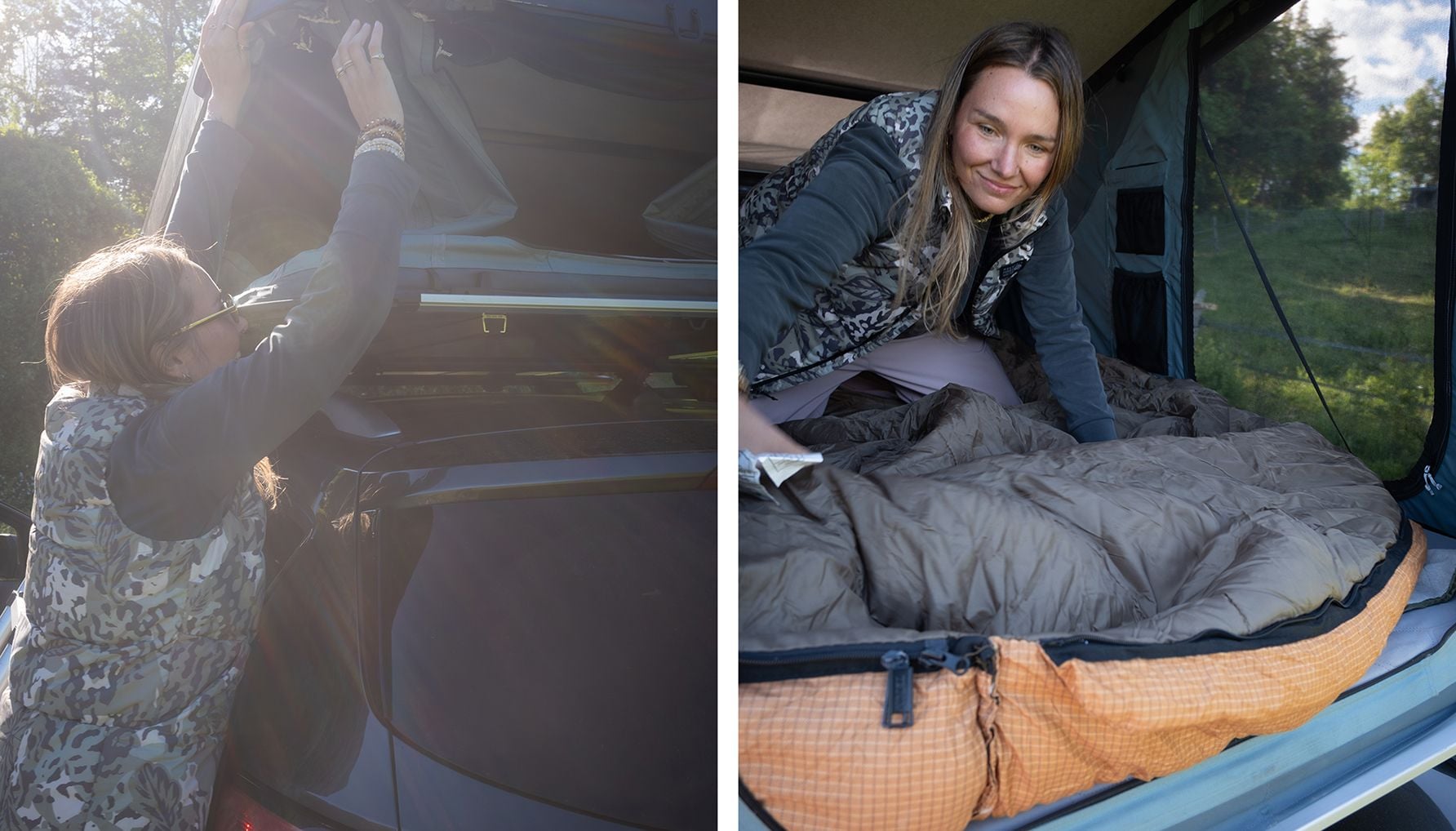
Two-panel photo: at left, a woman reaches up to open a rooftop tent on an SUV; at right, woman kneels inside an open tent arranging a sleeping bag and bedding.

What separates confident campers from beginners?

What separates confident campers from beginners isn't just better gear, or even more nights in the woods. It's repeatable systems. Beginners make every decision fresh each trip; experienced campers have made those decisions enough times that they have turned into habits. The skill isn't toughness or the perfect setup. It's a process that removes the thinking.

Good gear matters. Homing down a kit over the years is half the fun and imagining what other things you’d like to add to that kit in between trips is the other half. But it’s the habits around that gear that actually changes things. When I say that, I mean things like having an organized and dedicated sleep system for your rooftop tent. Giving your kitchen gear an organized home. Having repeatable spots for all of your important items. Keeping your setup process mostly consistent between trips. And the often overlooked and annoying step of making sure everything is cleaned and reset when you get home from each trip.

I'm not the most naturally organized person. You should see the cyclone of empty seltzer cans, dog toys, and climbing gear that passes as my car. So when I tell you that being organized for camping changed my relationship to the activity entirely, I tell you that as someone who isn't predisposed to doing things this way. When I was first starting out, I would want to go camping and would write a new list on a random piece of paper each time. Then I'd start the hunt. My gear would still be dirty from the last trip, scattered across every room of my apartment. It took me forever to get ready. I'm sure you know what I'm talking about.

So, here's where I've landed. I have a spreadsheet with 4 tabs that mirror my 4 totes of camping gear. Those 4 totes cover everything from backpacking, to rooftop tent camping, to winter backcountry epics. We’re not going to tackle the specifics of a packing list here, that deserves it’s own article, which will be published in the coming months. The reason I talk about this and love my tote system so much is that every decision I used to make in a panic the night before a trip has now been made permanently. When I'm taking the rooftop tent out, I grab one tote and go. The tent's already made up, so packing is genuinely just grabbing the tote and figuring out food. Not only does that cut down on the thinking that I have to do before each trip, but it buys me a new level of spontaneity, and the confidence that I’ll always have what I need once I’m out there.

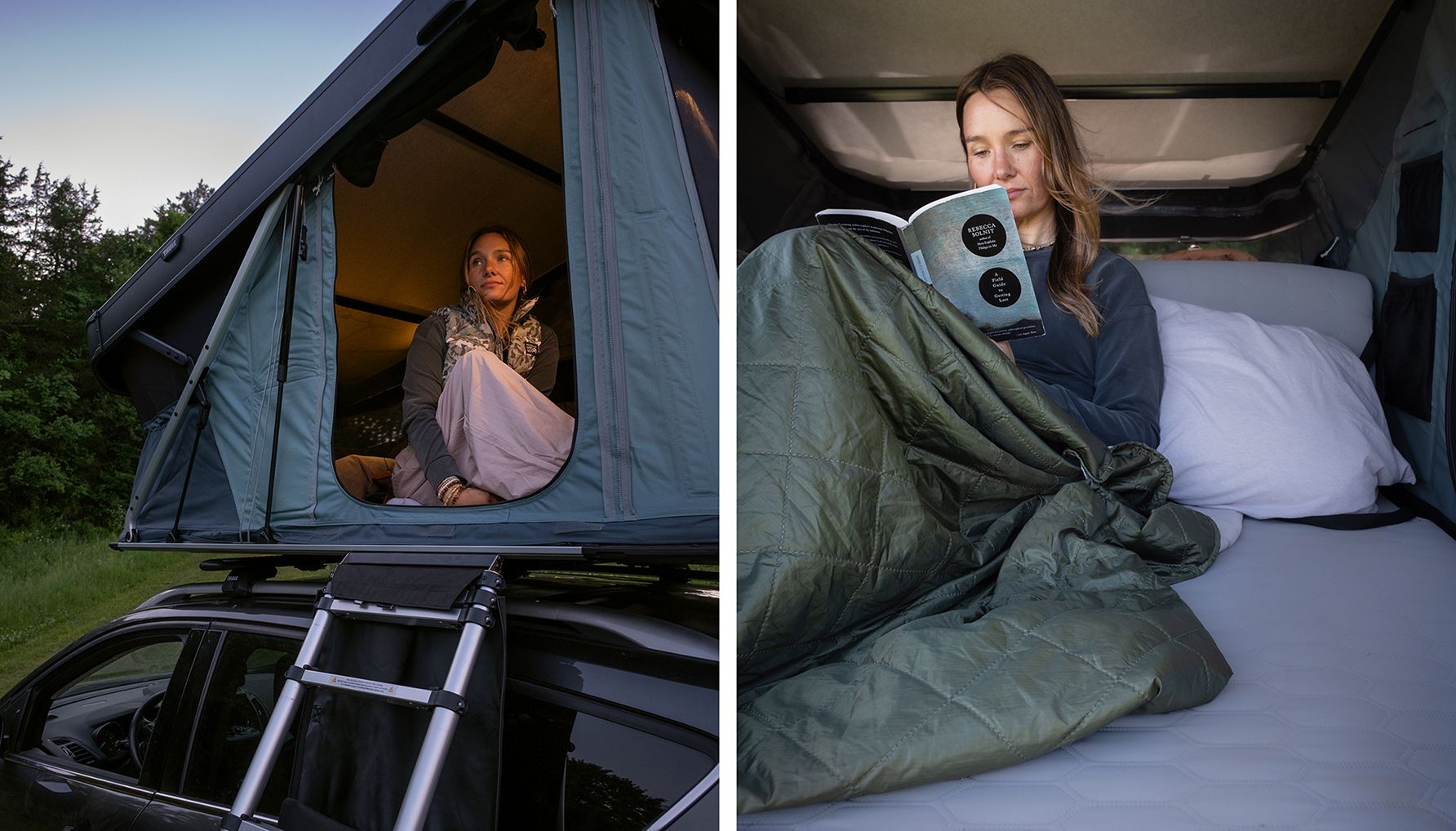
Two-panel photo: at left, a woman sits in the open doorway of a rooftop tent on an SUV at twilight, ladder extended below; at right, a woman reads a book in bed inside the tent, tucked under a green quilt.

What should you do when you first arrive at camp?

When you first arrive, don't park for good. Stop the car, get out, and walk the site for a minute before you commit to a spot. Look up for dead branches, check the ground for level, and think about where the sun will hit in the morning. Then park with intent. Those first five minutes set the tone for what comes next.

On quick overnights I barely think about it anymore, but even now, on the first day of a big backcountry trip, I get a little panicked. I rush, I make mistakes, I bump into things that turn out harder than I expected. That's exactly why slowing down matters so much. Camping is about going slow. So go slow.

Over the years I’ve settled into the same basic routine, from pulling in to settling down.

1. Take a breath. Don't park yet. Pull in, get out, and walk the site for a minute to get a feel for your surroundings.

2. LOOK UP. Scan for dead branches over any potential tent site. Widowmakers (dead and hazardous overhead trees and limbs) are real, and they're dangerous. Take the extra second.

3. Read the site. Which parts are level? Where's the sun going to hit in the morning? How easy is it going to be to climb doz÷÷÷wn the ladder from your tent at 3AM for a bathroom run?

4. Park with intent. Level the vehicle, set the parking brake, then open the rooftop tent and drop the ladder.

5. Stage what you'll want after dark. Headlamp in the storage compartment, a book tossed up top, slippers in the boot bag, etc

6. Set up the kitchen and the small stuff. Hammock, stove, water, light, chairs, fire kit.

7. Take another breath. You're set. Enjoy being outside.

Sleep, setup, packing, and living around the tent all deserve their own deeper look. For now, the simplest version is this: rooftop tent camping gets easier when you stop treating each trip like a fresh problem and start building repeatable systems. All of this is quickly learnable. The question isn’t whether you can do it, it’s whether it’s worth learning for the kind of trips you actually want to do, so let’s end by talking about fit.

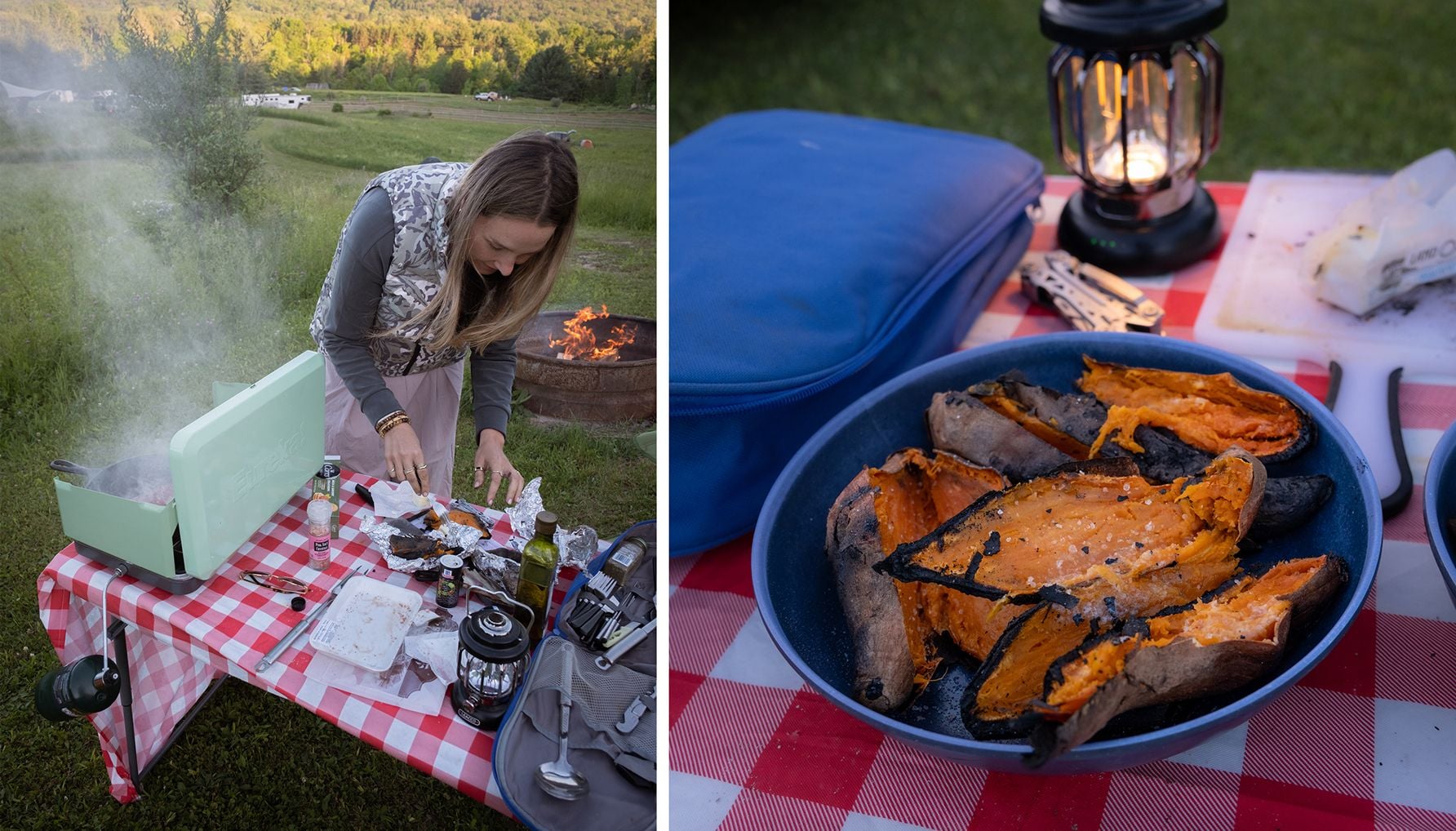
Two-panel photo: at left, a woman prepares food at a camp table with a stove and supplies, a fire pit and green valley behind her; at right, a close-up of fire-roasted sweet potatoes split open in a blue bowl beside a glowing lantern.

Is rooftop tent camping for me?

Rooftop tent camping tends to work for people who like movement paired with place. People who want to wake up near the trailhead, the river, or the mountain road. People who don't mind learning a few systems once in exchange for freedom later. It tends to work less well for people seeking zero setup, complete insulation from weather, or leisure that arrives fully assembled. Either way is fine. Not every form of rest works for every person.

But here's the thing about fit: almost anyone can camp comfortably. You'll probably make a few mistakes and feel uncomfortable the first couple of times. Don't let that discourage you. Those mistakes are easy to fix. Focus on the parts you do love. Morning coffee in the crisp air. Watching the moon rise over the hills. Clothes that smell like campfire for the next week. If you love those things enough to clumsily make your way through a few trips, you can become a proficient camper.

The best rooftop tent trips are the ones where the camping itself fades into the background and becomes infrastructure for everything else. The early hike, the hidden swimming hole, the dog outside for twelve hours, the dinner cooked slowly. The tent doesn't make the trip good. It makes the things that make the trip good easier to reach.

So you don't need to become a "camping person." You don't need to cosplay ruggedness or suddenly love knots or titanium utensils. You just need to bring the interests you already have into a setting that lets you experience joy with intention. Many people dismiss rooftop tent camping because they mistake first-trip awkwardness for permanent difficulty. The first trip might feel messy. The second probably will too. By the third, you start doing things without thinking. And that's when you start to understand what all of those idyllic social media images were trying to get at. Not that camping doesn’t have some drawbacks, but that it's a skill worth learning.

What I do now. Top tips.

A few habits that I think have been the difference between trips feeling clumsy and trips feeling easy:.

1. Keep core gear packed and grouped year-round. If you’re still homing in exactly what you need, just keep the non-negotiables packed and grouped. You can build up..

2. Start with easy destinations and get more adventurous each time. Pick a first spot that's a short drive from home, near a town, with an easy way in and out. Somewhere forgiving enough that nothing has to go perfectly. Dial in your systems there, then push further each trip.

3. Bring better food than seems necessary but keep it easy. One thing I love to do is to do all of my cutting at home and just bring everything in a container. If I need an onion, I’ll chop it the night before, and when I’m at camp I’ll just dump it in and I’m done..

4. Unpack fully when you get home. Wash your camp cookware immediately. Restock consumables after each trip. You’re going to regret it when you forget..

5. Park with morning in mind. A spot that seems great in the middle of the afternoon might be baking in the hot sun by 8am or take forever to warm up if it’s in the shade or wind. Before you commit, think about where the sun will come up, what temperatures you’re expecting, and point the tent so morning light works for you..

6. If you’re stressed, slow down. When in doubt, sit down for a minute. Unnecessary urgency always makes things harder..

7. Don’t let your campsite slowly explode throughout the weekend. No need to be too intense about it, but if everything winds up everywhere, packing up gets annoying fast. Put the obvious stuff away as you go and you’ll be glad you did when it’s time to pack up and leave..

8. Drink lots of coffee. Or tea. Either way. It’s one of the better camping rituals..

9. When you’re buying a piece of new gear, ask yourself “will this help me camp more often?” That’s the key consideration for all the best gear..

10. Keep a list on your phone called "next time." You’re going to learn a ton every time you’re out. It’s easy to forget.


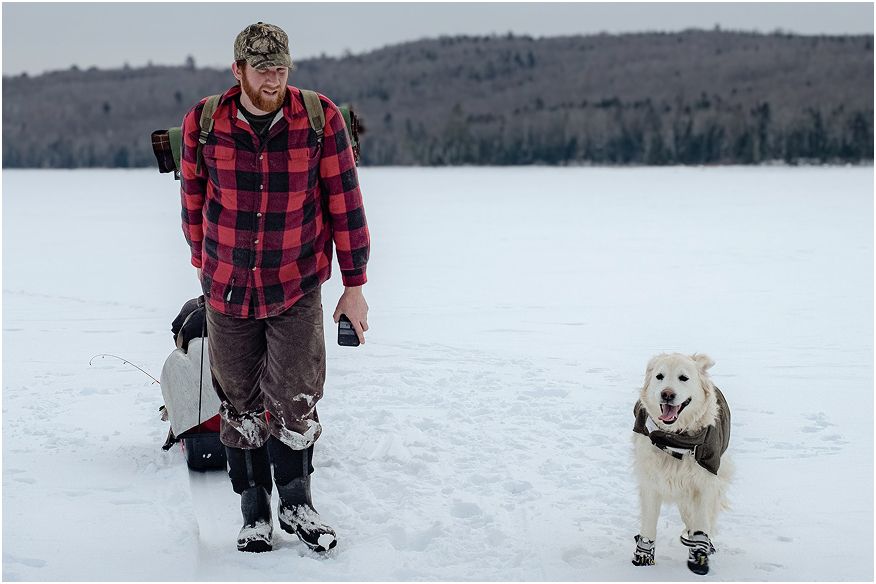
Dan Caridi pulling a gear sled across a frozen lake with his dog on a winter fishing trip.
Dan Caridi

Guest Writer:
Dan Caridi is the Associate Category Manager for Adventure Camping at Thule, where he helps design gear that makes camping easier and more enjoyable. In his spare time, he’s typically outside, whether that's climbing, fishing for smallmouth, or posted up at camp.
Explore