• Free shipping on rooftop tents, cargo boxes and orders over $229. See details.
A family standing beside a dark SUV with a rood box and a Thule Arcos rear-mounted cargo carrier. It is parked outside a modern cabin in a snowy landscape, with one adult pushing a stroller and a child walking toward the vehicle.

The complete guide to rear-mounted cargo carriers

If you’re an outdoor explorer, sports enthusiast or a family looking to optimize your vehicle’s capacity, adding a rear-mounted cargo carrier can help enable your active lifestyle. Providing ergonomic and efficient storage at the back of your car, it quickly becomes a reliable travel companion for every journey.


In this article:
Why choose a rear-mounted cargo carrier?

Once mainly used in industrial settings, rear-mounted carriers are quickly becoming a popular choice for modern travelers. Today, these cargo carriers are thoughtfully designed accessories that complement both your vehicle’s aesthetic and its practical functionality. 


Ergonomic handling and access

Easy mounting and waist-high position allow for effortless loading and unloading. There is no need for heavy lifting over your head, making it the ideal solution for heavy luggage or bulky daily items.


Optimized for efficiency

Its position in the vehicle’s “slipstream” minimizes wind resistance and maximizes fuel and battery efficiency. The rear-of-car position also allows for easier access to height-restricted areas like parking garages.


Versatile usage

Keep your roof free and your sunroof clear, or maximize your storage by using the roof to carry additional large equipment, such as bikes, surfboards, or kayaks.

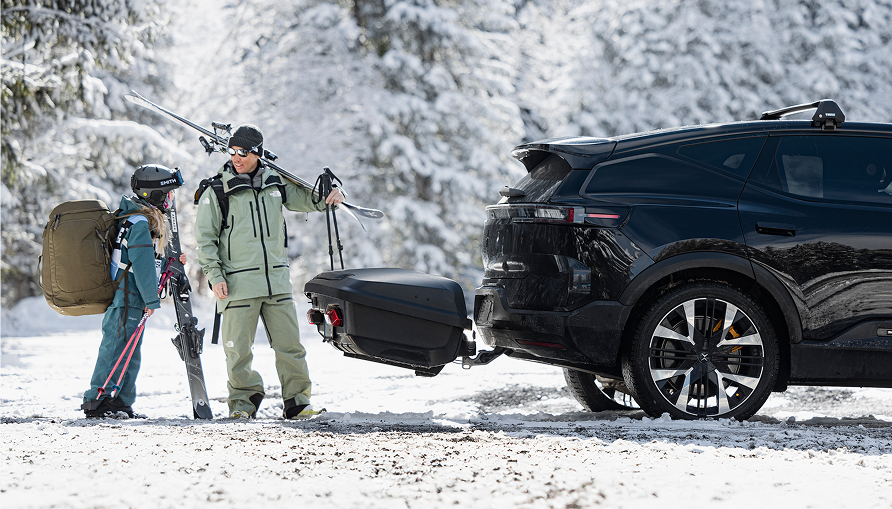
Two people standing beside a dark SUV with a rear-mounted cargo carrier in a snowy landscape, carrying skis and winter gear.

When to use a rear-mounted cargo carrier?

A rear-mounted cargo carrier is an ideal accessory for any kind of activity. Whether it’s for regular road trips or daily use, they offer flexible storage tailored to your needs.


Travel and vacation

Cargo carriers offer the ideal space for sporting equipment like golf bags, snowboards, or bulky camping essentials.


Active city life

Keep your interior clean and stow your daily items in the cargo box. The spacious storage is great for carrying strollers, groceries, or equipment for football or hockey practice.


EV and hybrid owners

For vehicles where roof loading isn't an option, or for drivers focused on battery efficiency, these carriers optimize, and in some cases even extend, your driving range.


Which rear-mounted cargo carrier should I choose?

There are a few key factors to consider when choosing your cargo carrier. Finding the perfect model starts with your needs and understanding your vehicle's hardware capabilities.


Size and style considerations

Rear-mounted cargo carriers come in different sizes and designs, so you can choose a solution that suits your specific needs.

Sizes:
  • Standard sizes: Ranging from M to XL, these are the most versatile options that accommodate a wide variety everyday items and travel gear.
Styles:
  • Hard-shell: Easy to mount and made from high-performance, durable materials that protect your gear from the elements.
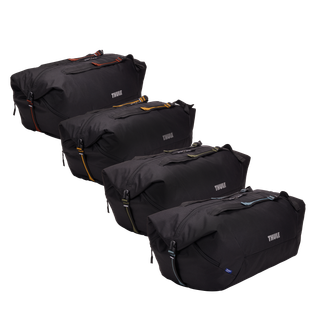
  • Soft-shell: Lightweight and usually foldable for easy storage, water-resistant to keep water and dirt from sticking to the surface.

Compatibility considerations

Mounting systems:
Rear-mounted cargo carriers mount on a platform attached on your towbar or hitch receiver. Always make sure that the platform is compatible with your vehicle and weight limitations.


Platform variations:
  • Integrated platforms: Some cargo carriers feature a built-in platform for a single integrated unit.
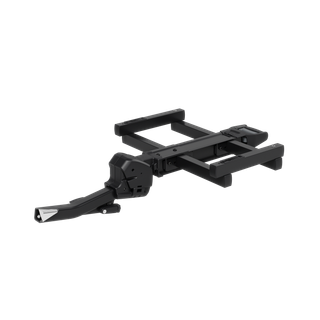
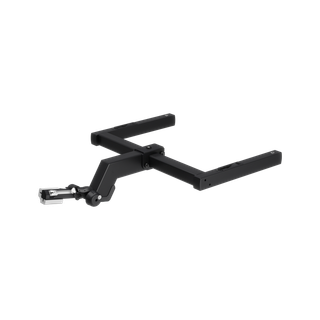
  • Dedicated platforms: A tailored platform designed to carry a specific cargo box.
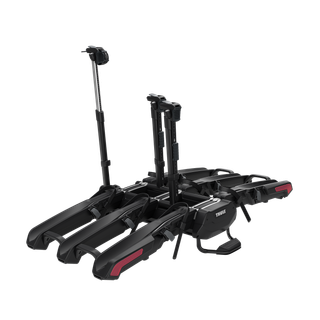
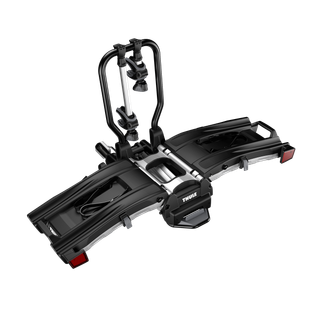
  • Carrier racks: Certain cargo boxes mount onto a specialized rack or carrier platform, such as a bike carrier, turning it into a multi-purpose transport solution.

If you want to know more about vehicle capabilities and platform options, take a look at our article Will a hitch cargo carrier fit my car?


Meet the Thule family of rear-mounted cargo carriers


Thule Arcos - modern design and great aerodynamics

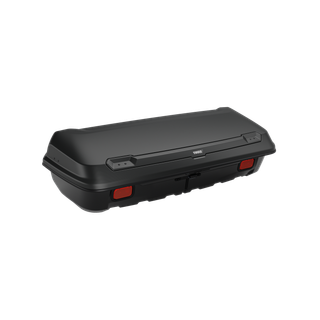
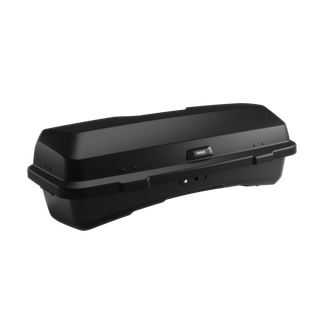
With its modern and streamlined aesthetic, Thule Arcos feels like a natural extension of the vehicle. The spacious hard-shell box holds everything from a stroller to luggage to golf bags, or snowboards or even skis (Arcos XL). The sleek, low-mounted design ensures convenient loading and unloading of cargo, while providing great visibility from the rearview mirror or backup camera.


Thule Santu – versatile and easy to use

Thule Santu is a hard-shell carrier designed for our bike carriers. It mounts to Thule Epos, Thule EasyFold 3 and the Thule EasyFold XT (with an adapter), transforming your bike rack into a multi-purpose transport solution. Thule Santu offers great aerodynamics and easy loading with smart safety and ease-of-use features. The integrated wheels and handle allow smooth transportation to and from your car.


Good to know


Weight distribution

Distributing your gear properly inside the carrier ensures your car’s handling remains stable and predictable. Place your heaviest items at the bottom and as close to the vehicle’s bumper as possible. For more packing tips and best practices, take a look at our article How to pack safely with a hitch cargo carrier.


Visibility and road regulations

While local traffic regulations always take precedence, you shouldn’t exceed the maximum allowed speed limit when driving with a cargo carrier, usually 80 mph (130 km/h).

Keep in mind that a rear-mounted cargo carrier adds to your car’s length and make sure that your indicators, brake lights and license plate are fully functional and are clearly visible.


Exhaust pipe heat

As exhaust pipes generate high temperatures that could damage your carrier, make sure to check the distance between your pipe and carrier to avoid damage to your gear.


Rear-mounted cargo carrier or roof box?

If you’re not yet perfectly sure that the rear-mounted cargo carrier is the right solution for you, consider if a roof box could be a better option.


A short benefits guide


Rear-mounted cargo carriers:
  • offer ergonomic loading and unloading due to their lower position,
  • free up space on the roof for lower wind resistance or storing other cargo and equipment,
  • offer benefits for EV owners who can’t store cargo on the roof and maximize battery range.

Roof boxes: 
  • mount on the roof,
  • are great for long, bulky gear like skis (up to 215 cm),
  • offer more packing volume,
  • don’t add extra length to the vehicle, making it easier to parallel park.  

If you want to learn more about if a roof box is a good option for you, take a look at our guide The complete guide to roof boxes


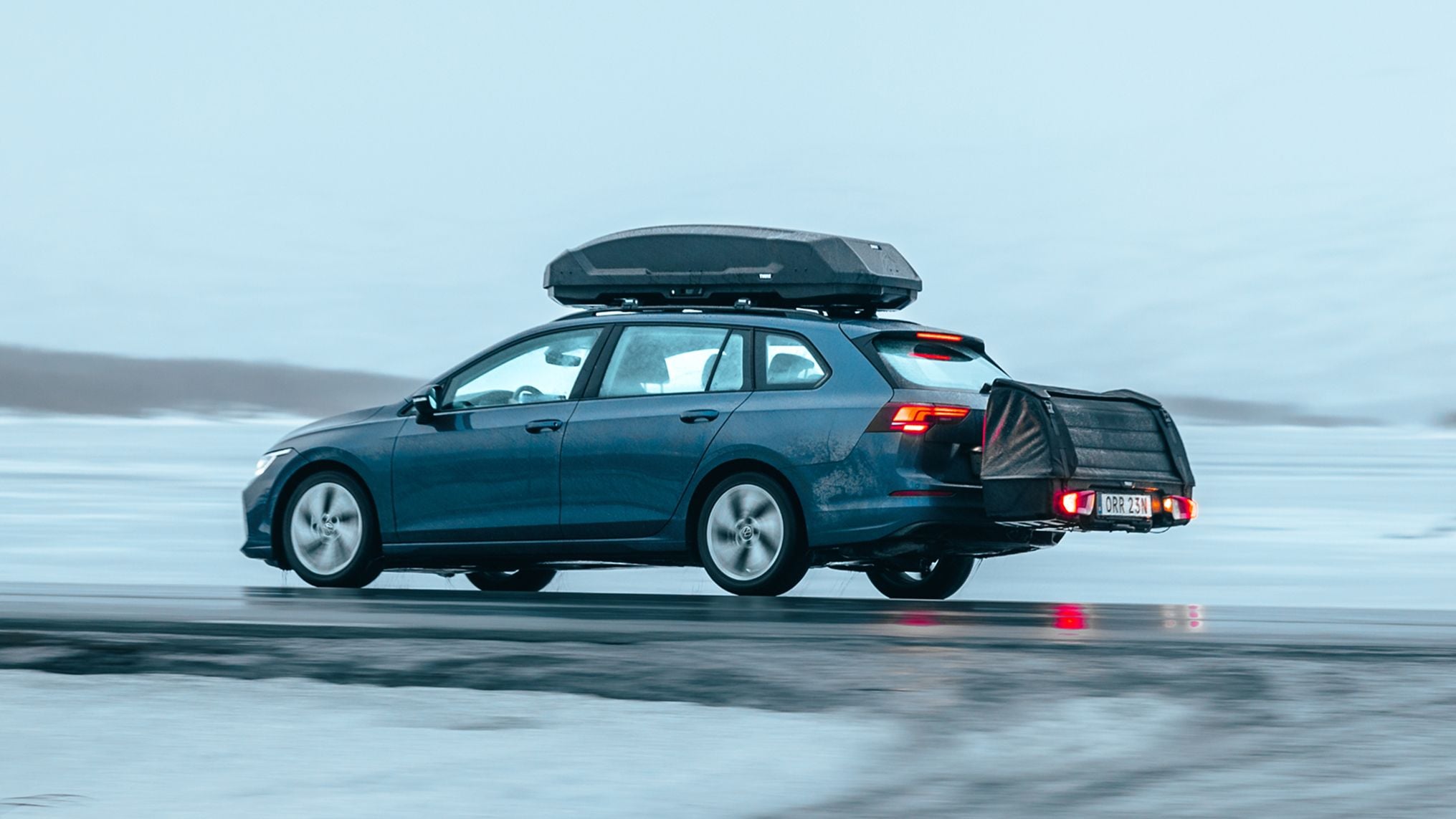
A blue car driving on a wet, icy road with a roof box and a rear‑mounted cargo carrier attached, set against a snowy landscape.
With a wide range of sizes and designs, including both hard-shell and soft-shell options, you can find a solution that suits your specific needs. This is Thule Onto 2 rear-mounted cargo carrier and Thule Force L roof box on a Thule WingBar Edge roof rack on a Volkswagen Golf Variant
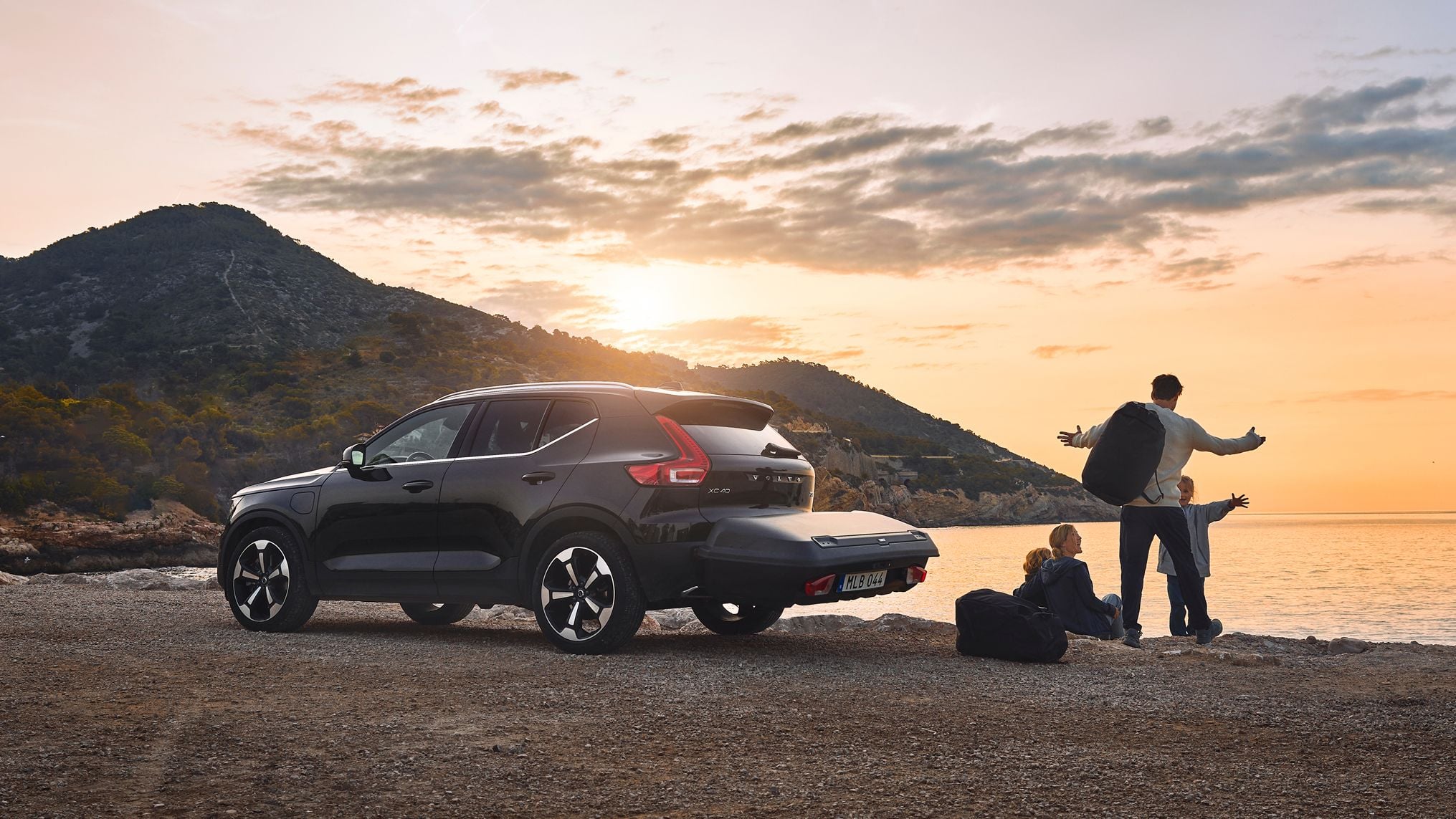
A dark SUV with a rear‑mounted cargo carrier parked by the shoreline at sunset. A family of four with travel bags, overlook the water and distant hills.
A rear-mounted cargo carrier is an ideal accessory for any activity, from daily use to long road trips. It offers flexible storage tailored to your specific needs. This is Thule Arcos L rear-mounted cargo box on a Volvo XC40
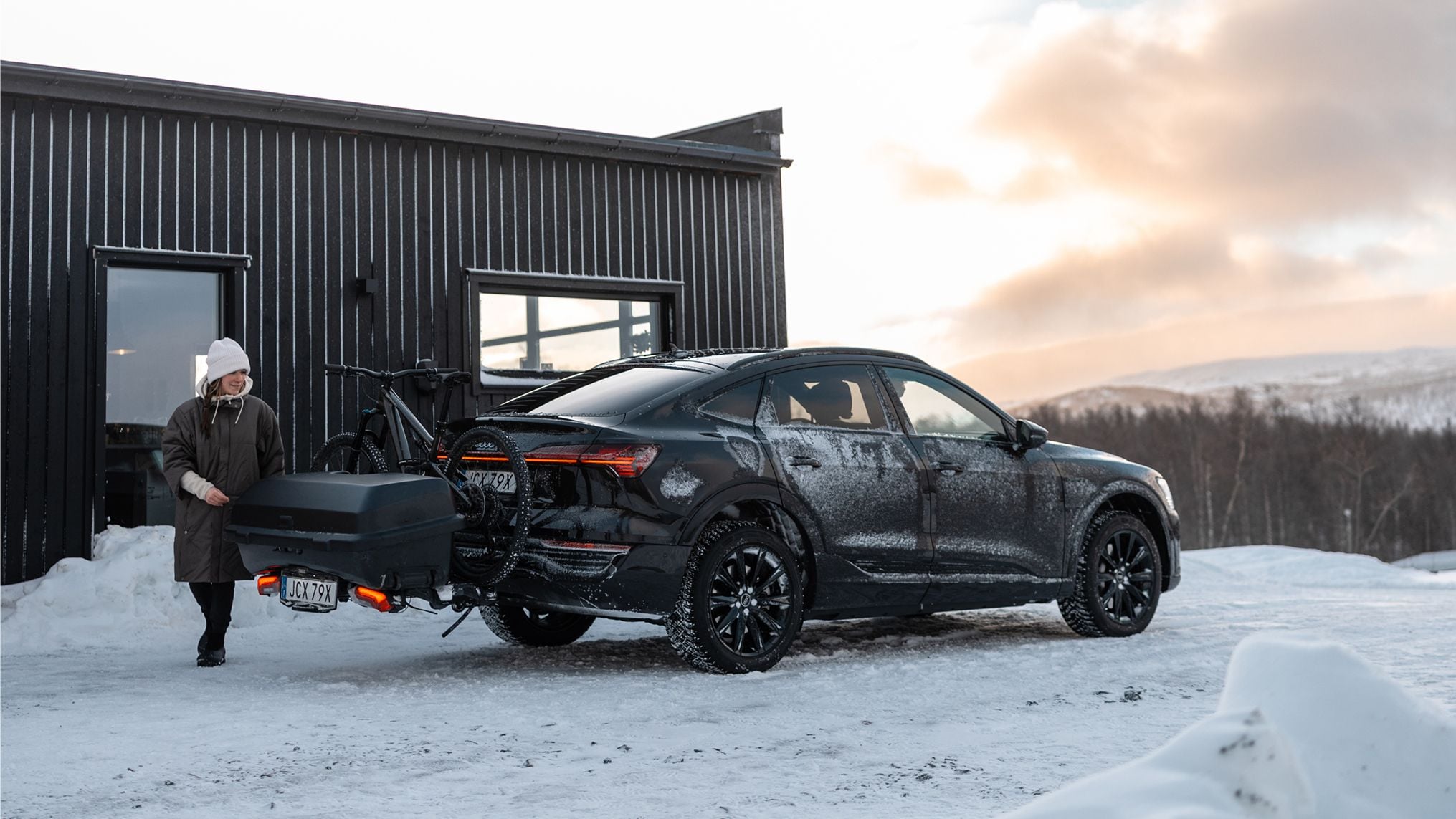
A dark SUV with a rear-mounted cargo carriers system holding both a box and bicycle is parked next to a black wooden cabin in a winter landscape. A person approaches the rear of the vehicle.
Some rear-mounted cargo carriers attach to a bike carrier, transforming the rear of your car into a versatile, multi-purpose transport system. This is Thule Santu cargo box on Thule EasyFold 3 bike carrier on an Audi Q4 e-tron.

Explore