• Unfortunately, online shopping on thule.com is not available in your country
Two people standing behind a car,  loading gear into an open rear‑mounted cargo carrier.

How to pack safely with a towbar cargo carrier

A towbar cargo carrier is a great way to add extra storage to your vehicle while keeping your gear easily accessible. Understanding how to load your carrier correctly is the key to a safe and smooth drive, whether you’re heading out for a weekend of sports or need more room for everyday adventures.

How much weight can I load?

The amount of gear you can carry depends on several factors, including model and size.

What they all have in common is that the cargo load may not exceed the recommended weight limits of the product and the total weight of both the cargo and carrier must be supported by the car's vertical weight limit.


Understanding weight limits

Before you start packing, you must account for three specific weight factors to ensure your setup is within safe operating limits:

  • Vertical weight limit: The towball’s vertical weight limit is found in your car’s manual or next to the towbar, this is the maximum vertical "nose weight" your vehicle can support.
  • Platform load limit: The mounting platform that holds your cargo carrier has its own maximum weight capacity. This must be able to support the combined weight of the cargo box and your gear.
  • Cargo box load limit: Each specific cargo box model is engineered to hold a maximum load weight. Ensure your cargo weight does not exceed this limit.

To find out more about vehicle compatibility and platform considerations, explore our article Will a towbar cargo carrier fit my car?


Calculating cargo weight

To calculate your maximum allowed cargo you can use this simple formula:

  • Your car's vertical weight limit – weight of the carrier platform - weight of carrier box = your maximum allowed cargo weight.

Example: Your car has a vertical weight limit of 75 kg, the platform weighs 20 kg and the empty cargo box weighs 15 kg, leaving 40 kg available for cargo.


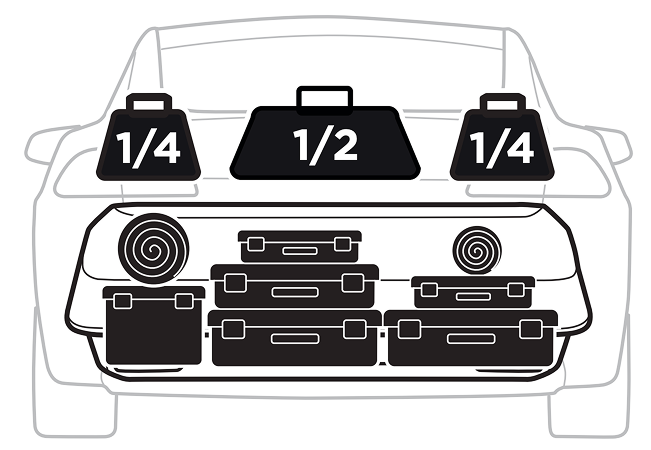
The ¼, ½, ¼ rule for packing

Place your heaviest items at the bottom and as close to the vehicle’s bumper as possible. Aim for a ¼, ½, ¼ ratio, where 50% of the weight is centered and the remaining 25% portions are placed on the sides.

Distributing your gear properly inside the carrier is almost as important as your weight limits. It ensures your car’s handling remains stable and predictable.

Technical illustration showing a rear-mounted cargo carrier on a vehicle with labeled weight distribution.
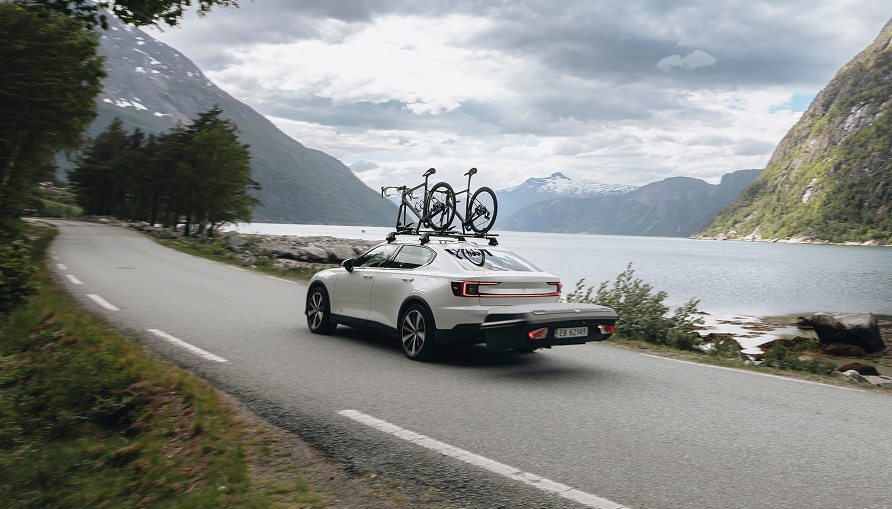
A car fitted with a rear-mounted cargo carrier driving with two bicycles mounted on the roof.

How fast can I drive?

The amount of gear you can carry depends on several factors, including model and size.

While local traffic regulations always take precedence, you should never exceed the manufacturer's recommended speed limit for the product, usually 130 km/h.

Keep in mind to adjust your speed based on your total cargo load, weather conditions, and traffic intensity. Sudden impacts can increase the force on your towbar, potentially causing damage to the carrier or your vehicle, so always approach speed bumps with extra caution.


Good to know

Rear visibility

Keep in mind that a rear-mounted cargo carrier adds to your car’s length and be careful when changing lanes or parallel parking.

Make sure that your indicators and brake lights are fully functional and are clearly visible. In many regions, it is a legal requirement to use a carrier with integrated lights and a secondary license plate.


Exhaust pipe heat

As exhaust pipes generate high temperatures that could damage your carrier, make sure to check the distance between your pipe and carrier.


Rear-mounted cargo carrier or roof box?

A towbar cargo carrier is a great way to add a flexible storage solution to your vehicle. If you regularly transport extra-long equipment like skis or snowboards, or if your hitch has a low maximum load weight limit, a roof box could be a more suitable and effective solution.

If you want to explore the benefits and differences between rear-mounted cargo carriers and roof boxes, explore our guide Comparing rear-mounted cargo carriers and roof boxes.


Explore